Substrate discussions in Living Lab Skåne – experiences and new trials
On Wednesday, 21 January, we brought together the farmers working with various substrate trials within Living Lab Skåne for knowledge exchange and joint planning ahead of 2026. The key question of the day was simple: What should we test in the coming season within Living Lab Skåne?
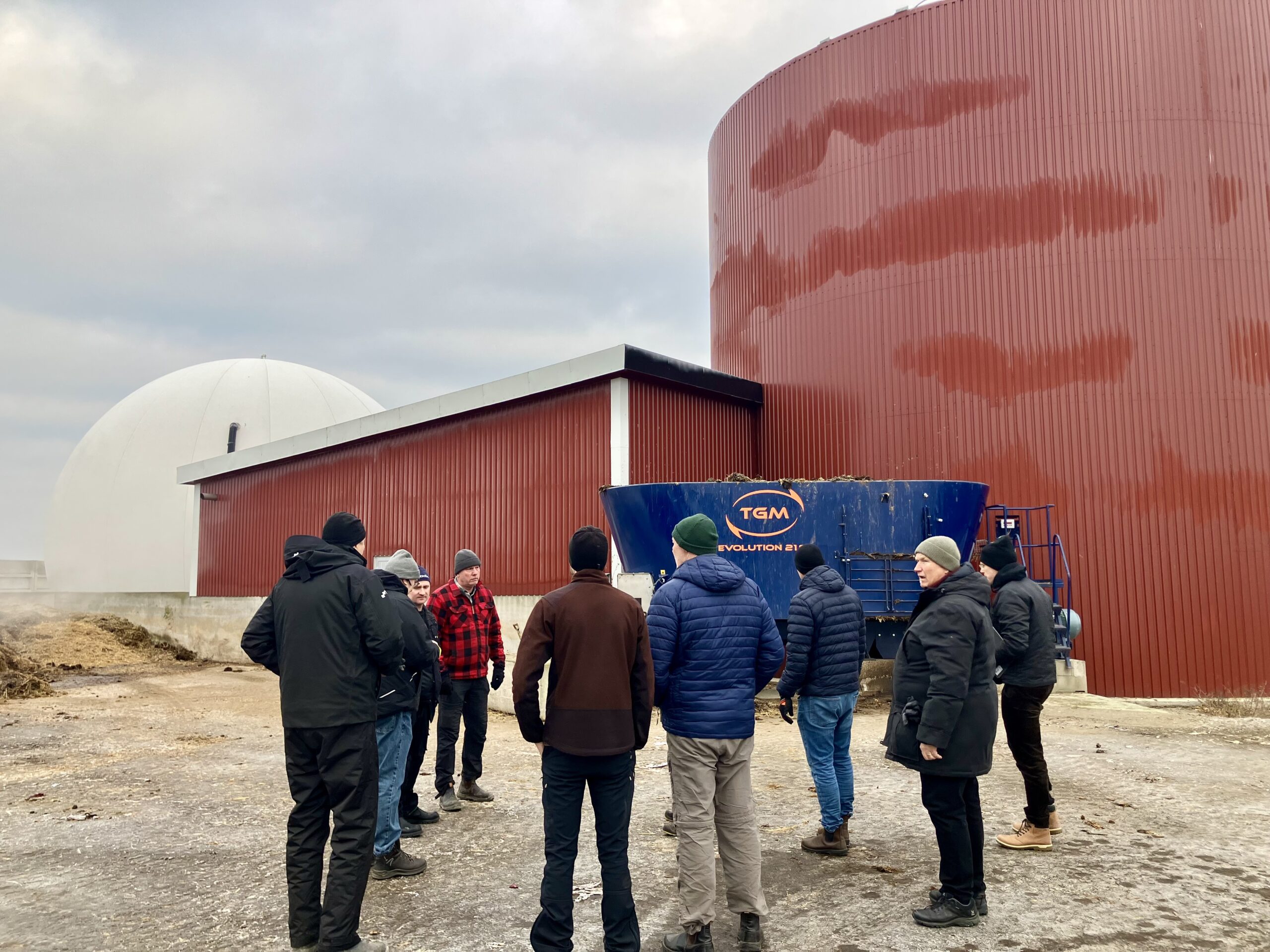
The day began with a study visit to Assargården in Glumslöv, just outside Landskrona, where brothers Jonas and Stefan run dairy production and arable farming. It was especially appreciated that their father, Jan-Eric Andersson, also took part – an important source of inspiration behind the farm’s biogas initiative. Assargården collaborates with Accel AgroBiogas within Living Lab Skåne and has during 2025 been involved in several trials with new farm-based biogas substrates.
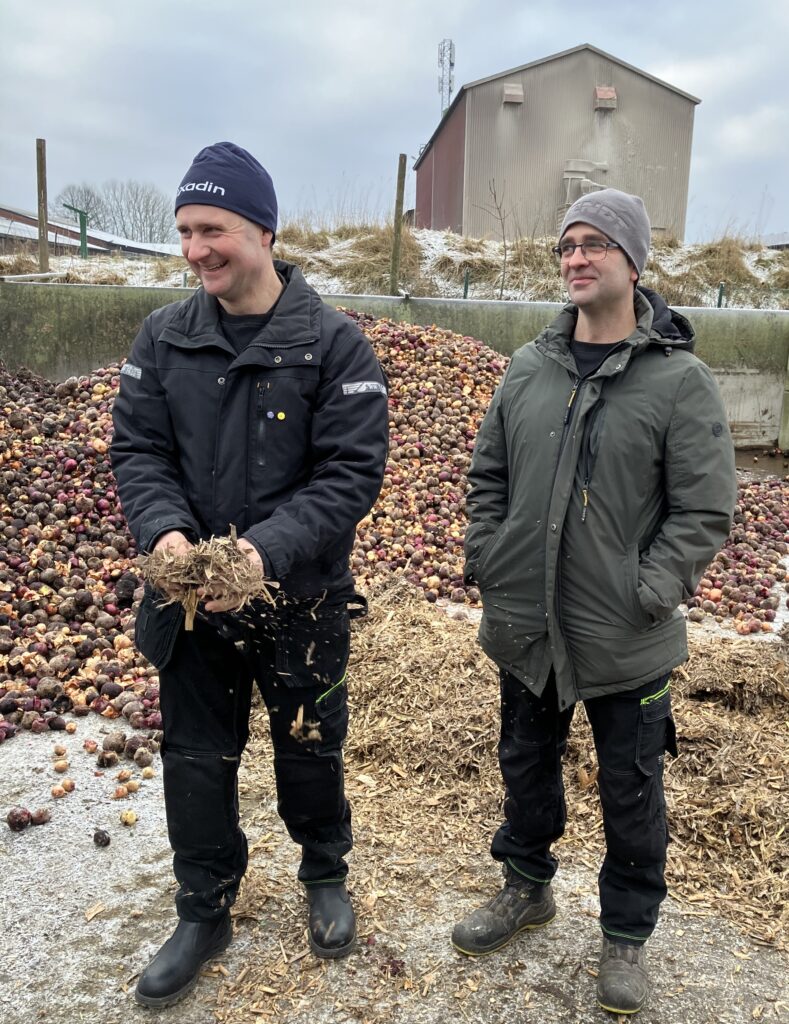
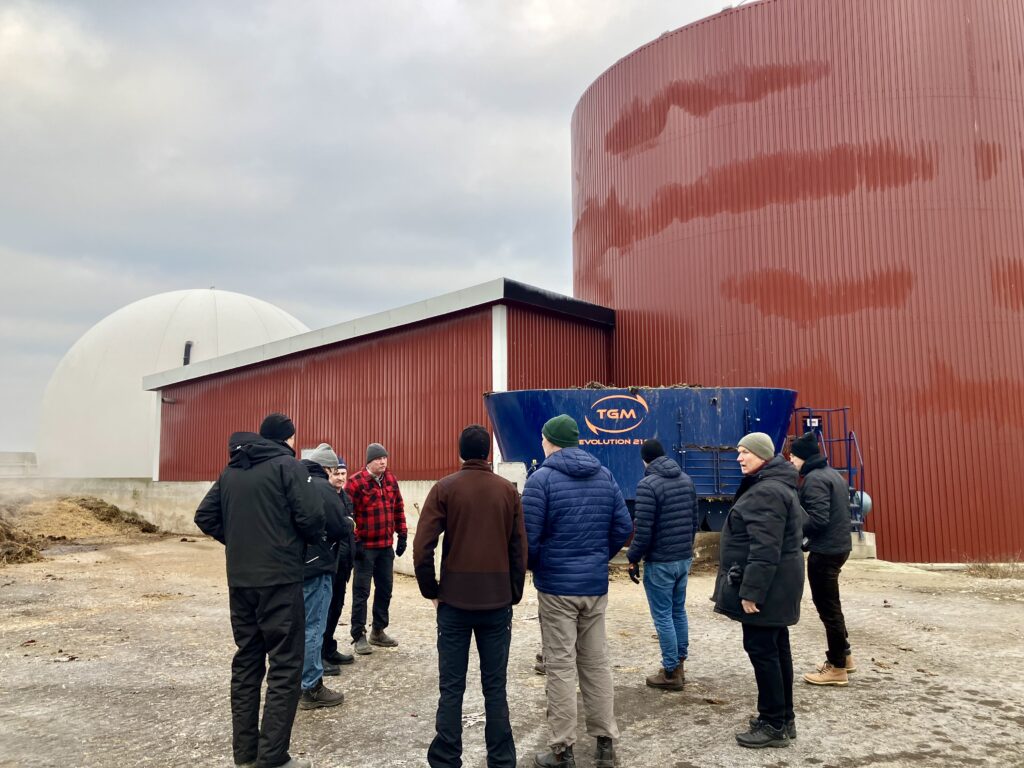
Among other things, the farm has tested catch crops after cereals, consisting of oats and Westerwold ryegrass, which can be used both as animal feed and as biogas substrate. Another trial has focused on utilising maize straw after grain maize harvest, comparing two different logistics solutions: baling in large square bales versus precision chopping and ensiling in tubes.
Low-hanging fruit and smarter data collection
During the workshop, the results from the Living Lab trials in Skåne in 2025 were discussed, as well as how data collection can be further developed in 2026 to produce clearer key figures for costs and biogas potential. One key insight from the discussions was the need to combine ambition with realism.
“There are great opportunities in catch crops, but we also need to make use of the low-hanging fruit, such as precision-chopped straw and grass seed straw. This can be a good alternative or complement to late harvests of catch crops, especially when the risk of soil compaction is high,” the group concluded.
At the same time, the importance of multifunctional catch crop mixtures was highlighted – crops that not only work as biogas substrates but can also be used as feed or contribute to improved crop rotation and soil health.
Idea-rich dialogue and strong engagement
The discussions were both lively and creative, with all participants contributing experiences, new ideas and perspectives on how the work can be further developed.
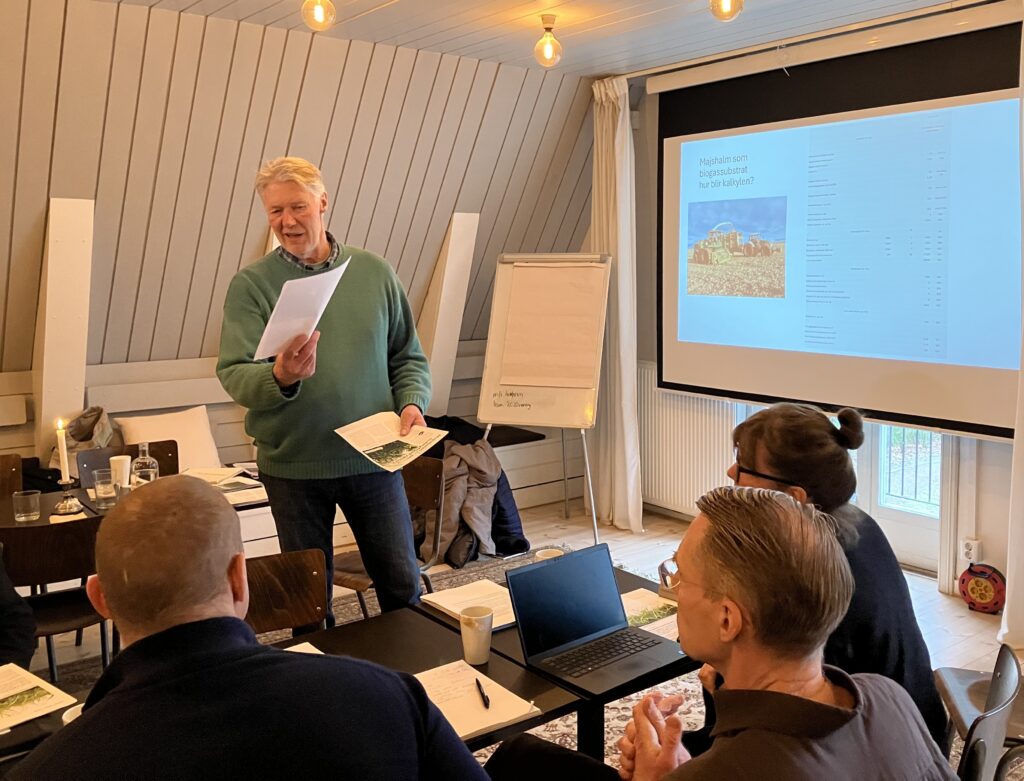
“There is a clear momentum in the substrate discussions. The interest in how agricultural biomass can contribute to increased biogas production is strong, and the willingness to collaborate is high,” summarised Sven-Erik Svensson from SLU Alnarp.
What’s next?
The selection process for which trials will be carried out in 2026 is ongoing, but several tracks were discussed in more concrete terms. One example is grass silage – harvesting grassland with the presence of weeds such as black-grass or thistles – where the question is which grass mix is most optimal for biogas compared to roughage for dairy cows. Fjordland in Jutland plans to carry out investigations within Accel AgroBiogas in 2026.
Different types of straw were also identified as particularly interesting substrates: cereal straw, rapeseed straw and grass seed straw. At present, test digestion of grass seed straw is being carried out in a laboratory environment. Beet tops were discussed as a possible alternative in cases where transport distances to biogas plants are short, while potato haulm is being investigated in Denmark to determine whether the methane potential per hectare is sufficiently high – and which harvesting technique would then be most suitable.
Catch crop mixtures that both function as a good preceding crop for the next main crop and provide high biomass yields with sufficient dry matter content were also highlighted. Particularly interesting are crops that can simultaneously help control nematodes and other soil-borne plant diseases.
Another concept discussed was green rye – winter rye harvested in mid-May, followed by the establishment of a new main or catch crop such as maize, sugar beet, processing peas, cabbage, sweet potato, industrial hemp or Sudan grass. At the same time, it was emphasised that this system requires access to irrigation, as green rye consumes large amounts of water in spring.
The day clearly demonstrated the strength of our Living Lab work: when practical experience and research come together, shared learning is created along with concrete steps towards new solutions for sustainable biogas production.