New report sheds light on the climate and nitrogen effects of harvesting cover crops
A new scientific advisory report from Aarhus University brings valuable insights to the Accel AgroBiogas partnership’s ongoing work on sustainable use of cover crop biomass for biogas production.
The report was commissioned by the Danish Ministry for the Green Tripartite (MGTP) following recommendation in the Danish National Bioeconomy Panel, an advisory body that supports government development of sustainable bioeconomy policies. Authorities requested the assessment to guide future climate and nitrogen policies: a topic central to Accel AgroBiogas’ cross-border collaboration.
Background: Why this knowledge was needed
In both Denmark and Sweden, cover crops play a key role in reducing nitrogen losses and supporting soil health. At the same time, the bioeconomy is rapidly evolving, and there is increasing interest in using part of this biomass for biogas, if it can be done without compromising environmental protection.
The new report reviews existing knowledge on cover crops and, particularly, the effect of harvesting the biomass in relation to:
- biomass yield potential
- nitrogen leaching impacts
- greenhouse gas emissions
- the role of species choice and timing of sowing and harvesting
- and the potential climate benefits when the biomass is used for biogas
These themes are fully aligned with Accel AgroBiogas’ objectives of generating stronger decision-support for farmers, advisors and policy-makers on both sides of Øresund.
Key insights from the report
1. Early establishment of cover crops is essential for high yields
Data from more than 130 Danish measurements show large variation in cover crop biomass production. However, one pattern is clear: early sowing strongly increases both biomass yield and nitrogen uptake. This supports Accel AgroBiogas’ approach of testing strategies for earlier harvest of the previous main crop and, hence, earlier establishment of cover crops.
2. Harvesting affects cover crop species differently
Winter-hardy species such as ryegrass and grass-clover generally tolerate harvest well.
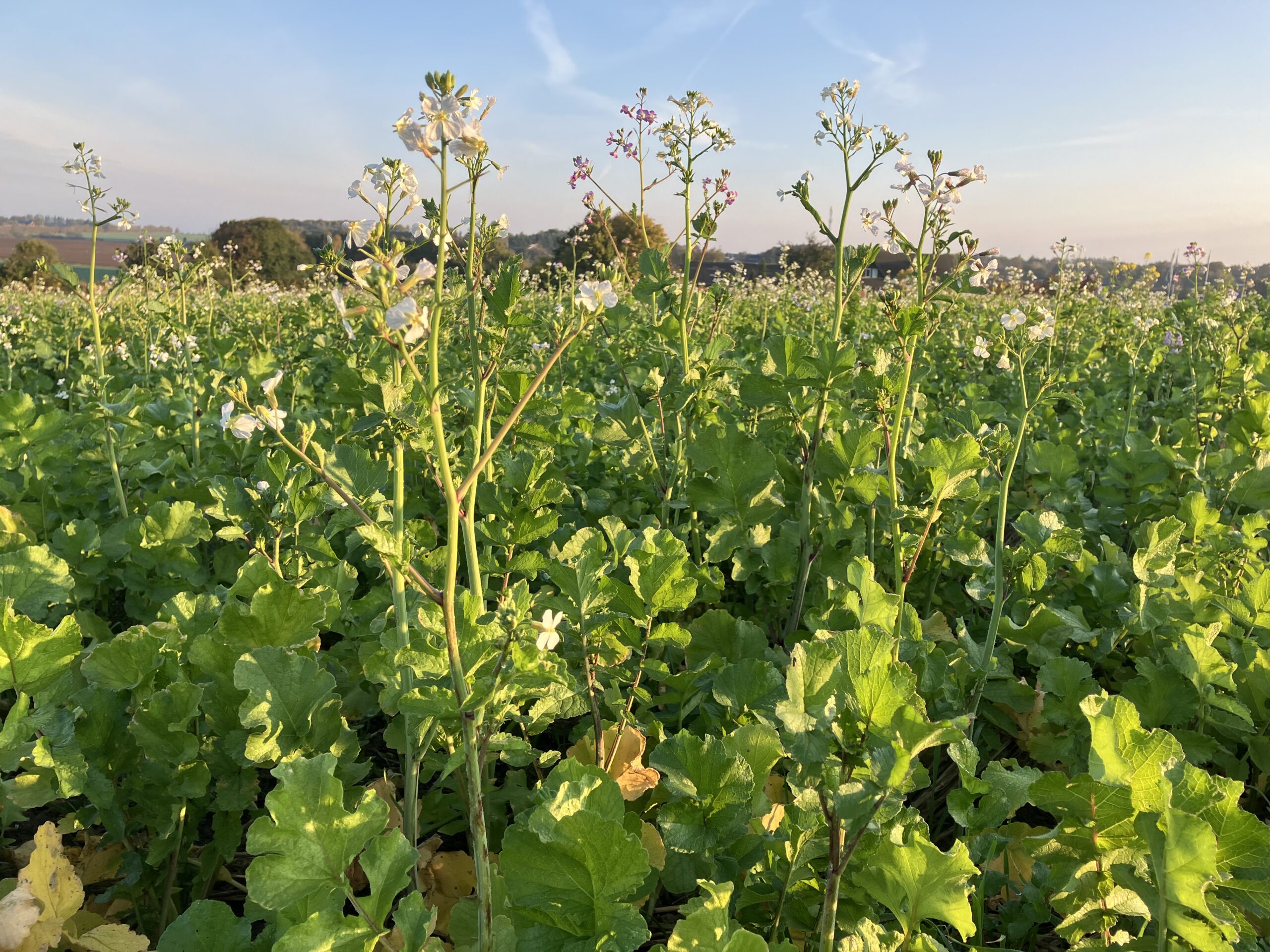
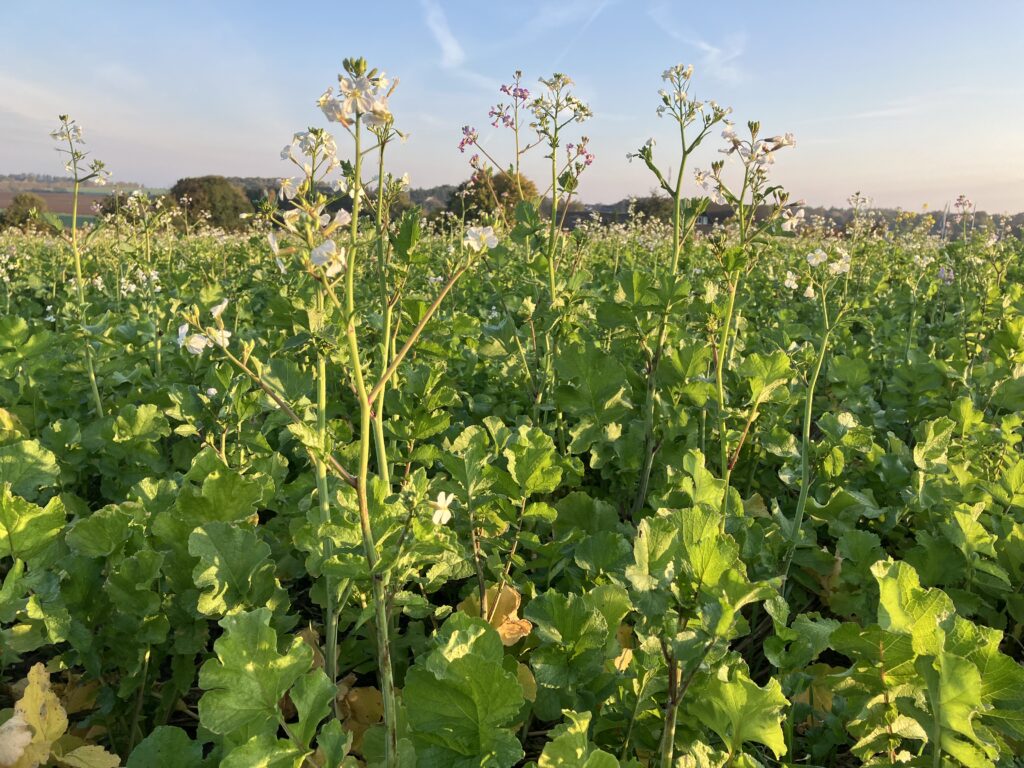
Non-winter-hardy species such as oil seed radish and phacelia may respond with root die-off and, in some cases, increased nitrous oxide emissions.
This distinction is central for Accel AgroBiogas, where species performance under Nordic conditions is a core theme.
3. Potential climate benefit when cover crop biomass goes to biogas
When cover crop biomass is digested in a biogas plant and the methane replaces fossil natural gas, the overall climate effect can be positive, with a reduced emission of greenhouse gases corresponding to:
– 360 kg CO₂e/ha for non-legume cover crop species
– 416 kg CO₂e/ha for cover crop mixtures including legumes
The benefit depends strongly on cover crop yield, methane potential of the biomass and low methane leakage from biogas production, some of which Accel AgroBiogas is currently testing in field trials in both Denmark and Sweden.
4. Nitrogen leaching remains an open question
Very few studies have measured nitrogen leaching when cover crops are harvested. The report highlights this as a major knowledge gap and stresses the need for multi-year, multi-site experiments.
Nordic relevance and connection to Swedish policy work
The findings also align closely with ongoing work at SLU Alnarp, where partners are developing a policy brief on crop residues and cover crops in relation to carbon farming and the bioeconomy. This strengthens the link between the Danish and Swedish policy landscapes.
Looking ahead: What Accel AgroBiogas contributes
The report concludes that harvesting cover crops has potential, but that environmental outcomes depend heavily on:
- species choice
- sowing time
- harvest strategy
- weather conditions
- and the performance of biogas systems
Accel AgroBiogas is currently generating the type of cross-border field data and system evaluations that are missing today. This includes:
- side-by-side comparisons of species and mixtures
- testing early harvest of main crops to improve biomass production
- measuring nitrogen dynamics
- assessing biogas yields
- and evaluating practical harvestability and soil impact under Nordic autumn conditions
This evidence will strengthen decision-making for farmers, advisors, industry and authorities.
More information
Read more: You can read the report here (in Danish) or the English summary here