Accel AgroBiogas tests new methods for more sustainable biomass in Foulum
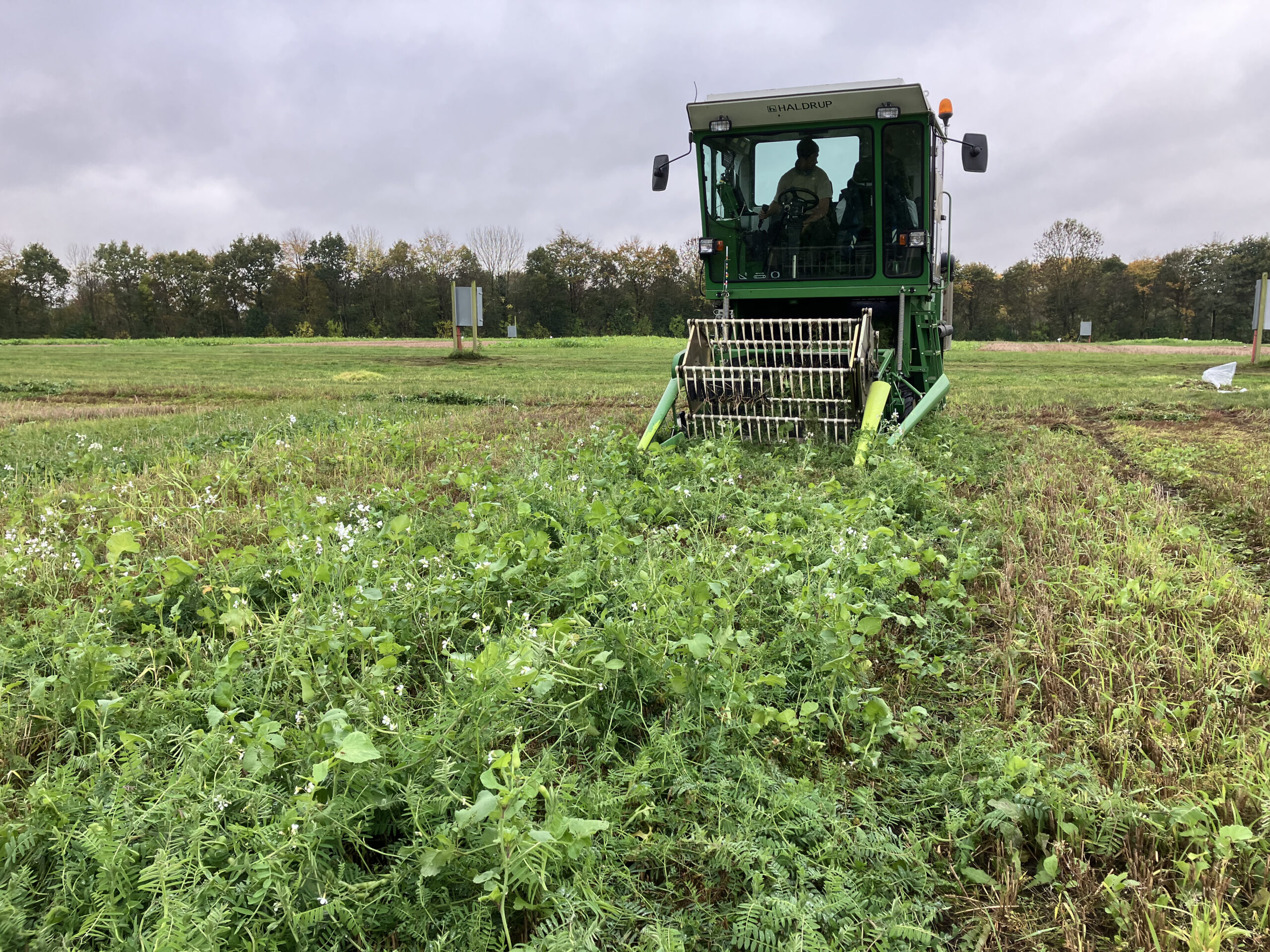
In Accel AgroBiogas, we are working purposefully to identify new solutions that can increase the production of sustainable biomass for biogas without increasing environmental impact. As part of the project, Aarhus Universitet is conducting a comprehensive field trial investigating how early cereal harvesting and different cover crop strategies affect biomass production, nitrate leaching, and climate footprint.
The first experiences from 2025 point to promising results, and in 2026 the trials will be expanded with even more detailed measurements.
More autumn biomass through early harvesting
One of the key elements of the project is to investigate what happens when cereals are harvested slightly before full maturity. Preliminary results show that this gives cover crops a significantly better start.
“When we harvest cereals a bit earlier, cover crops get a longer growing season and establish better,” says senior advisor Søren Ugilt Larsen from Aarhus Universitet.
This stronger establishment increases the amount of autumn biomass that can potentially be harvested and supplied to biogas plants—an important perspective as energy crops such as maize are being phased out in Danish biogas production.
Leaching: A key piece of the puzzle
Although early harvesting increases biomass production, it is still unclear how it affects nitrate leaching when cover crops are harvested in autumn.
During the winter, researchers collected soil water samples using suction cells in the trial. These will be analyzed during 2026, with results expected after the summer.
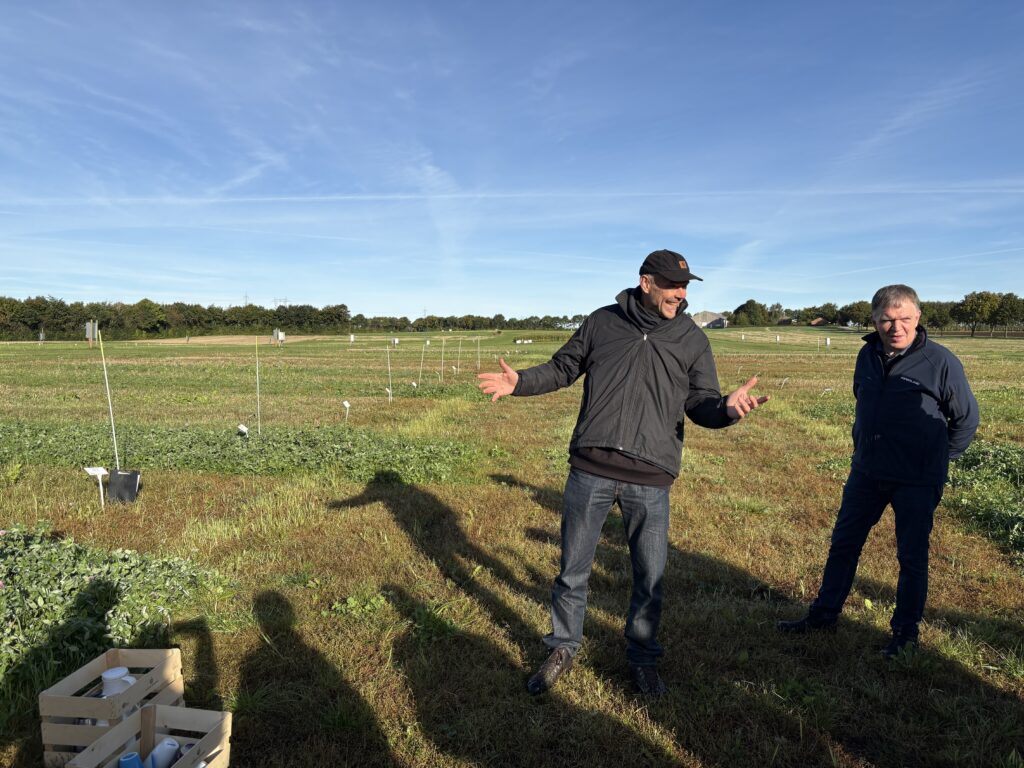
“If we can document that cover crops can be harvested without increasing leaching, it opens up entirely new opportunities for farmers and the biogas sector,” says Søren Ugilt Larsen.
If the measurements show no difference, that in itself is an important result. It would mean that autumn biomass can be utilized without compromising the environment.
Methane potential: Can ensiling provide an energy boost?
At Aarhus Universitet’s biogas facility, straw and cover crops from the 2025 trial are currently being analyzed for methane potential. In particular, the researchers are examining:
- whether ensiling wet straw and cover crops can act as a pre-treatment
- whether mixing tall stubble with cover crops improves ensiling
- whether partially immature straw from early cereal harvest results in higher gas yields
Previous studies indicate that ensiling together with green material can increase methane yield. Accel AgroBiogas is now testing this under controlled conditions.
2026: A strengthened experimental design and new climate data
In 2026, the experiment will be repeated in an improved version. The core elements remain:
- two harvest timings in cereals
- multiple types of cover crops (both spring-sown and late-summer-sown)
- harvesting of straw and cover crops on half of the plots
At the same time, the design has been made more robust, and new climate parameters are being added.
Measurement of nitrous oxide emissions
As a new element, nitrous oxide (N₂O) emissions will be measured in selected treatments in 2026. This is done in collaboration with the Climate Smart Research (CSR) project, led by Professor Lars J. Munkholm from Aarhus Universitet, who contributes both equipment and funding.
This makes it possible to assess the overall climate impact of different biomass strategies, including:
- biomass yield
- nitrate leaching
- greenhouse gas emissions from the soil
Together, these parameters provide a more precise picture of which solutions work in the field while also benefiting the climate.
A growing need for new biomass
The biogas sector has already utilized much of the easily accessible organic residual material from industry. At the same time, energy crops such as maize are being phased out, increasing the need for other sustainable biomass sources.
Cover crops—especially those that must be grown for environmental reasons anyway—are therefore an obvious candidate.
“The biogas sector needs new, sustainable feedstocks. Cover crops are a perfect fit if we can document that they work both in the field and in the biogas plant,” says Søren Ugilt Larsen.
Perspective for farmers
Undersown cover crops may slightly reduce grain yields. However, if the additional autumn biomass can be sold for biogas at a reasonable price, the overall calculation can become positive.
Therefore, Accel AgroBiogas is developing a calculation tool to show the economic consequences of different strategies based on real trial data from both 2025 and 2026.
Next steps
In the coming months, the analyses from the 2025 trial will be finalized, including:
- methane potential
- yields of cereals, straw, and cover crops
- the effect of early harvesting on nitrogen carryover
At the same time, new trial areas for the current year are being established.
The results will contribute to developing more climate-friendly and resource-efficient strategies for biomass production on farms as part of the green transition.