
New guidance may open up greater use of grassland in biogas production
The Swedish Energy Agency has published new guidance on sustainability criteria and installation approval: ER 2026:15 Guidance on sustainability criteria and installation approval – revised based on REDIII. For the biogas value chain, the guidance includes an important clarification regarding grassland as a feedstock for biogas.
The guidance states that grassland can be classified differently depending on the purpose of cultivation:
“If grassland is cultivated with the aim of improving crop rotation for food and feed crops, or if it is surplus feed, it is considered a residue. If grassland is cultivated solely for the purpose of being used for biogas production, it is considered a crop.”
This clarification does not mean that grassland cultivated specifically for biogas production may not be used. However, the classification affects how the climate performance of the biogas is calculated. When grassland is classified as a residue, the climate value of the biogas is not burdened with emissions from the cultivation of the grassland itself. This can give biogas produced from this type of grassland a better climate value, often referred to as a CI score.
This is an important distinction. Cultivating grassland can involve emissions linked to, for example, inputs, soil cultivation and harvesting. If the grassland is classified as a crop, these emissions are included in the climate calculation. If, on the other hand, the grassland is classified as a residue because it is cultivated to improve crop rotation or constitutes surplus feed, the climate calculation may be more favourable for the biogas produced.
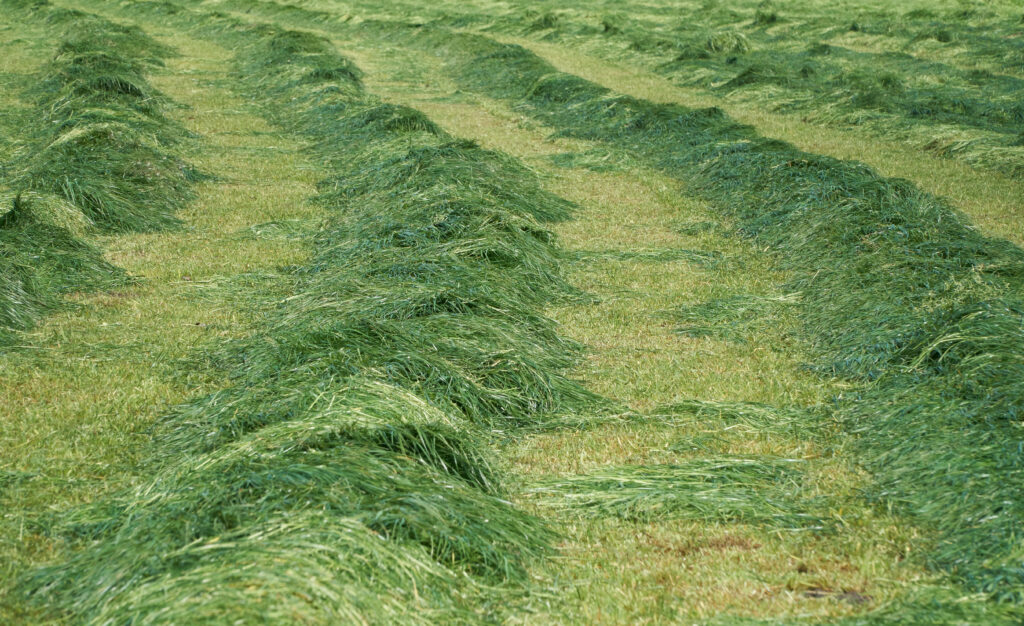
For agriculture and the biogas sector, this may open up new opportunities to make use of the potential of grassland as a substrate. Grassland can contribute biomass for biogas production while also fulfilling important functions in the cropping system by improving crop rotation, increasing soil fertility, storing carbon and reducing the need for external inputs.
For Accel AgroBiogas, this clarification is an important piece of the puzzle in the work to develop, test and disseminate new sustainable concepts for biomass supply in the Öresund-Kattegat-Skagerrak region. The project explores how agricultural biomass can be used more efficiently and sustainably, with a focus on substrates, logistics, business models and the role of digestate in circular agriculture.
The guidance also highlights the importance of regulations that reflect the reality at farm level. When regulations make it possible to distinguish between crops grown solely for energy purposes and biomass that arises as part of a sustainable cropping system, better conditions are created for synergies between food production, energy, climate benefits and farm economics.
Within Accel AgroBiogas, work continues to gather knowledge, practical experience and dialogue between farmers, biogas producers, researchers, advisors and public authorities. The aim is to contribute to increased and sustainable biogas production – without setting the different values of agriculture against each other.