New position paper: EU regulations need to make better use of agriculture’s biomass potential
Agricultural biomass can deliver several benefits at the same time. Grass leys and catch crops can strengthen cropping systems and provide environmental benefits, while the biomass can also be used to produce renewable energy and biofertiliser. In a new position paper, the Accel AgroBiogas partnership highlights the need for a more coherent European regulatory framework that makes better use of these synergies.
The EU has set a target of reaching 35 billion cubic metres of biomethane production per year by 2030. At the same time, within the Accel AgroBiogas project, we highlight that a significant share of the biomass potential in agriculture remains untapped.
Our new position paper, Biogas in a holistic bioeconomy strategy, particularly highlights grass leys, catch crops and crop residues as resources that can contribute to increased biogas production without putting food production, environmental benefits and energy production in conflict with one another. The position paper is based on research, practical experience and dialogue between project stakeholders in Sweden and Denmark.
Multiple benefits from the same cropping system
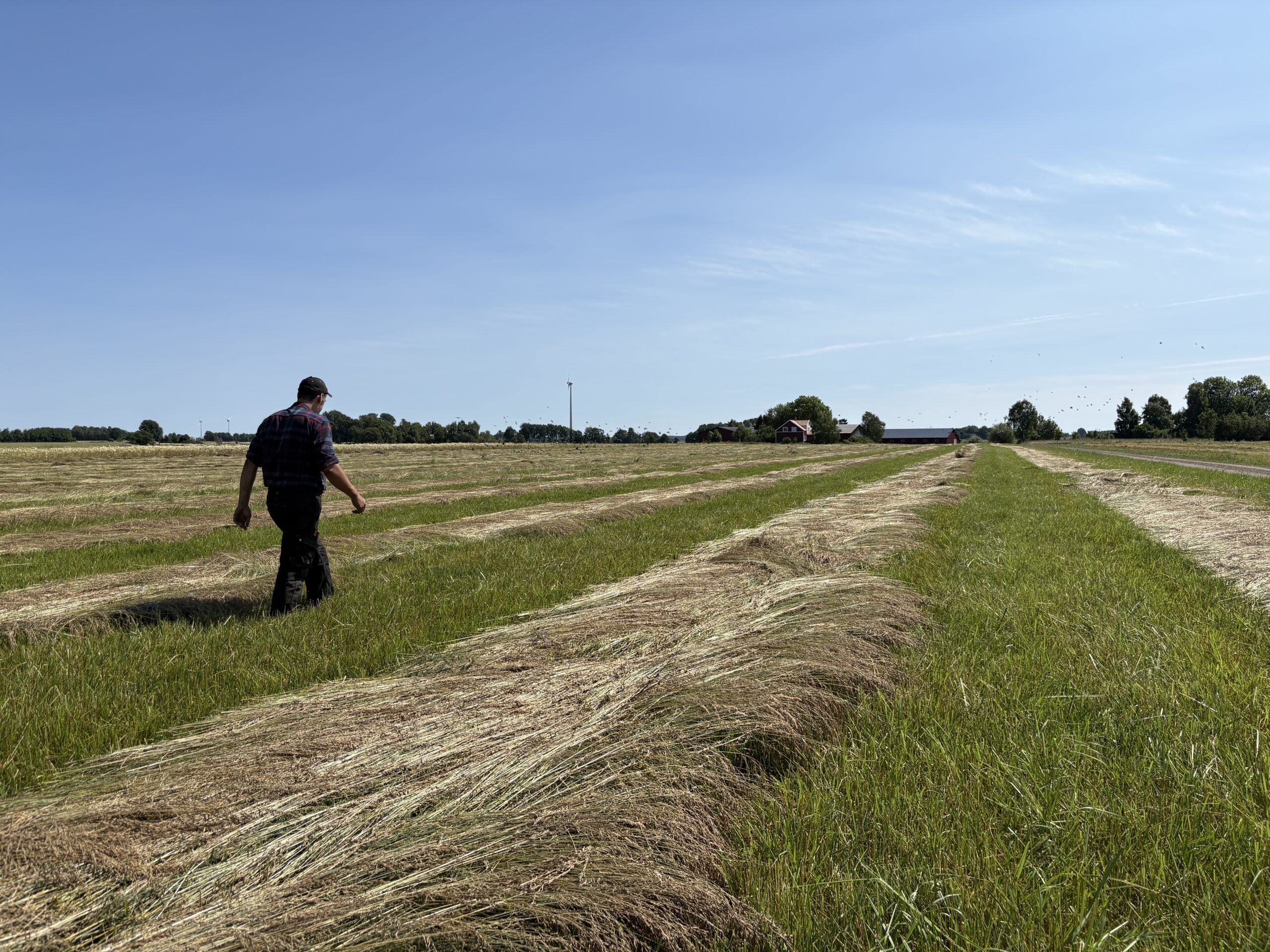
A central starting point is that land used for food production can also produce biomass for other purposes within the same cropping system. Catch crops and grass leys can, for example, be grown as part of the crop rotation and contribute to functions such as reduced nutrient leaching, improved soil quality and increased carbon sequestration. At the same time, the above-ground biomass can be harvested and used for biogas production.
In other words, this is not about taking productive agricultural land away from food production in order to grow energy crops instead. Rather, the position paper highlights the opportunity to make better use of biomass generated in multifunctional cropping systems and thereby create more value from the same land.
When the biomass is digested, nutrients can also be returned to agriculture through biofertiliser. This can contribute to more efficient nutrient use while at the same time producing renewable energy.
Regulatory frameworks need to work together
Today, energy, agricultural and environmental objectives are addressed through several different regulatory frameworks. Accel AgroBiogas points out that this can in some cases create conflicts between objectives that do not necessarily exist in practice. We therefore call for greater coherence between, among other things, the Renewable Energy Directive, RED, the EU’s Common Agricultural Policy, CAP, and the EU Bioeconomy Strategy.
Five recommendations are highlighted:
- better recognition of multifunctional cropping systems within RED
- greater consideration of ecosystem services throughout the entire biogas value chain
- better alignment between calculation methods under RED and the principles of CAP
- greater scope for regional adaptation when implementing EU rules
- increased coherence between EU legislation and certification schemes.
From competition to synergies
The key message is that future policy needs to better recognise how sustainable food production, renewable energy production and environmental benefits can reinforce one another. With a more coherent regulatory framework, more of agriculture’s untapped biomass can be utilised, while cropping systems can at the same time contribute to climate benefits, water quality and nutrient recycling.
Read the full position paper here: Biogas in a holistic bioeconomy strategy – Unlocking Europe’s Untapped Agricultural Biomass Potential.