Living Lab Västra Götaland
Västra Götaland has a long tradition of biogas production and a strong political commitment to strengthening the local bioeconomy. The region has invested in upgrading, infrastructure, and distribution, and several new biogas plants are either planned or have recently been expanded. At the same time, there is a growing need to broaden the substrate base—particularly by utilising local, underused residual streams from agriculture.
Within the Living Lab, the potential use of the following is being explored:
- Cover crops in winter wheat, which today often lack practical use
- Rapeseed and pea straw, with cultivation expected to increase due to the growing focus on plant-based protein and oil crops
This creates the conditions to transform today’s low-value residual products into climate-smart energy.
Activities
Information from Living Lab Västra Götaland
-
- Living Lab Västra Götaland
Looking ahead and new ideas in Living Lab Västra Götaland
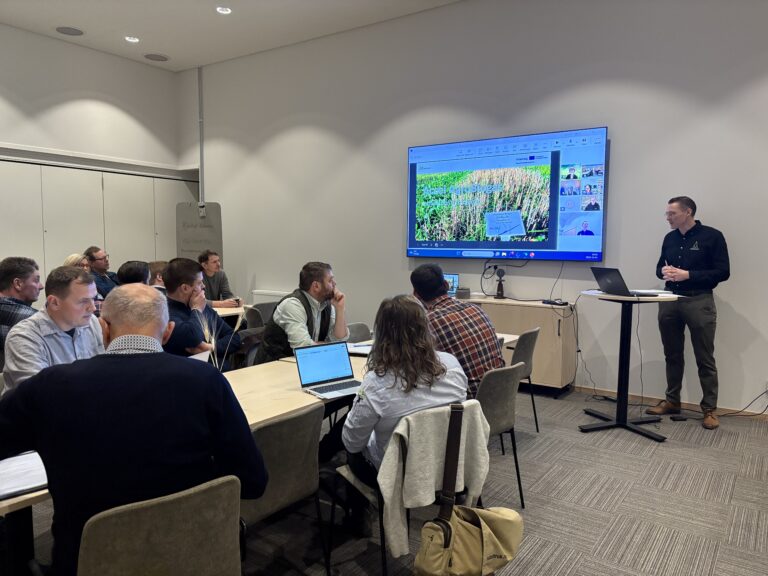
8 December 2025On 4 December, farmers, researchers and industry stakeholders gathered at Lagerhuset in Vara for a workshop within Living Lab Västra…
Biogas potential in the region
Despite having a well-established biogas sector, there remains a need to identify new, sustainable, and locally sourced substrates to reach the region’s ambitious production targets. Cereal crops, rapeseed, and legumes dominate arable farming, and large quantities of straw, pea straw, and clover-grass from ley cultivation represent potential resources for biogas production.
Side streams from the food industry, as well as manure from cattle, pigs, and poultry, are also used—or have the potential to be used—as substrates in the region.
What happens in practice?
The project carries out field harvesting of rapeseed and pea straw in Vara, followed by logistics solutions and co-digestion in a full-scale biogas plant in Jönköping. At SLU’s research farm in Lanna, techniques for combining threshing with the sowing of cover crops in winter wheat are being tested. All substrates are analysed in the laboratory to determine their biogas potential.The results are communicated to farmers, advisors, and decision-makers through seminars and other dissemination activities. A seminar is planned for September, and the project will also participate in field days on cover crops in October.
Conditions and desired effects
A key strength in Västra Götaland is the strong collaboration between research, industry, and practical farming. Farmer Adam Gruvæus in Vara—also active within LRF—contributes to strong anchoring within the agricultural sector. Several participating farmers are members of the Götene Biogas Cooperative and supply manure to GASUM. The project focuses on residual products that have so far lacked commercial use, giving it high innovation value.
The Living Lab in Västra Götaland aims to:
- Reduce greenhouse gas emissions by replacing fossil fuels and open-field straw burning
- Reduce nitrogen leakage and increase soil organic matter and carbon sequestration
- Strengthen the link between agriculture and biogas production to support rural development and regional resilience